
While both institutions provide financial assistance, there are significant differences between them in terms of offerings, eligibility criteria, interest rates, and other crucial factors.

Wipro was the biggest loser in the Sensex pack, slipping nearly 2 per cent, followed by IndusInd Bank, State Bank of India, Kotak Mahindra Bank, ICICI Bank, HDFC Bank, Infosys, Tata Consultancy Services, HDFC and Bajaj Finserv. On the other hand, Nestle, Mahindra & Mahindra, ITC, HCL Technologies, Asian Paints and Maruti were among the gainers.

From the Sensex pack, Tata Consultancy Services, Mahindra & Mahindra, ICICI Bank, Maruti Suzuki India, Power Grid, Axis Bank and Adani Ports & Special Economic Zones were among the laggards. On the other hand, HCL Technologies, Tech Mahindra, JSW Steel, Hindustan Unilever, Infosys and Titan were among the gainers.

'It is nice that the banking system is in good shape.' 'It is a little early to call it too good because I think it was too bad in the past.'

'EV-charging is the next big opportunity after fuelling'

All that you must know about the pros and cons of gift deeds, tax implications, essentials, documents required, conditions, etc...

Ask rediffGURU and PF expert Milind Vadjikar your insurance, stocks, mutual fund and personal finance-related questions.

The government may save over Rs 70,000 crore (Rs 700 billion) on capital and revenue expenditure allocated towards new schemes in the FY25 Budget that are yet to be implemented.

From the 30 Sensex firms, Bajaj Finance, Reliance Industries, Tata Steel, JSW Steel, Tech Mahindra, Tata Motors, Kotak Mahindra Bank and Maruti were the biggest laggards. Reliance Industries Ltd, India's most valuable company, on Monday reported a 5 per cent fall in the July-September quarter net profit as weak oil refining and petrochemical business hurt operational performance. ICICI Bank, Bharti Airtel, Asian Paints, Adani Ports, UltraTech Cement and HCL Technologies were among the gainers.
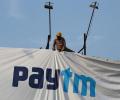
Paytm will focus on its core business of payments and cross-selling financial services as it works to achieve "profitability soon", said Vijay Shekhar Sharma, founder and chief executive officer of the fintech, on Thursday. "The past six months have taught us many lessons, giving us the opportunity to thoroughly examine our business processes, compliance, and the way we operate from the inside out.

Investors will take cues from the December quarter corporate earnings, with blue-chips like Infosys, Reliance Industries scheduled to report their results this week, in addition, inflation data and trading activity of foreign investors will also be crucial in dictating market trends, analysts said.

While this will incur a revenue loss amounting to 0.2 per cent of GDP, it will provide a strong boost to consumer sentiment and spending, points out Rajani Sinha.

The Maha Kumbh, billed as the world's largest gathering, concluded on Wednesday after 45 days, with lakhs of devotees taking a dip in the Sangam, the confluence of the Ganga, Yamuna, and mythical Saraswati rivers. Despite a stampede that killed at least 30 people, millions continued to visit the Kumbh, seeking salvation through the ritual bath. The event saw a mix of faith, tradition, and technology, drawing pilgrims and tourists from across the globe.

The growth was primarily driven by domestic investments, which accounted for 60 per cent of the total inflows during the first quarter of the financial year.

From the Sensex pack, Bajaj Finserv, HDFC Bank, Tata Motors, HCL Technologies, Tata Consultancy Services, Axis Bank, Infosys, IndusInd Bank, Tech Mahindra and Maruti were the major laggards. NTPC, Power Grid, Mahindra & Mahindra, JSW Steel, Bajaj Finance, ITC and Reliance Industries were among the gainers.

S&P Global Ratings on Tuesday said the Indian economy is set for "resilient growth" in 2025 and projected inflation pressure to recede which will lead to "modest" easing of the monetary policy by the RBI. In its India outlook for 2025, S&P also retained India's growth forecast for current fiscal at 6.8 per cent, followed by 6.9 per cent growth in 2025-26.

The US involvement in Ukraine and the Middle East is a distraction which has to end quickly so that the main business of China can be focussed on. China is America's only peer competitor, not Russia and not anybody else. Therefore it makes little sense to be diverted from the overall mission, explains Aakar Patel.

Ashok Vaswani, a banker with more than three-and-half decades experience in building and scaling up businesses across consumer and corporate banking and payments, will be the next managing director (MD) and chief executive officer (CEO) of Kotak Mahindra Bank. Last week, the Reserve Bank of India (RBI) had given its approval to Vaswani's appointment. Vaswani is currently President of Pagaya Technologies, a US-Israeli artificial intelligence (AI) fintech firm, which he joined in June 2022.

Simplifying investment policies at the micro level and introducing a time-bound framework will be critical for India's growth targets, notes Krishna Ella.

At the PMO, policies are framed by factoring in analytical perspectives, implications, sustainability, and other dimensions.

'Inflation is not good for industry. Nor for the economy as a whole.'

The National Payments Corporation of India (NPCI) has granted approval to Paytm to onboard new UPI users, subject to the adherence to all procedural guidelines and circulars, according to the company. The move is expected to come as a relief to Paytm, which had suffered a blow following the Reserve Bank of India's restrictions earlier this year on associate company Paytm Payments Bank Limited (PPBL) in onboarding new UPI users on the Paytm app. In March, the NPCI gave approval to Paytm to participate in UPI as a Third-Party Application Provider (TPAP).
HDFC Bank has reshuffled the portfolios of its senior management team. This is the first major rejig after the amalgamation of HDFC Ltd on July 1. "The runway for our growth is large. This change is being done to bring in a very sharp focus on leveraging what we have built and for enhanced execution," said Sashidhar Jagdishan, managing director and chief executive of HDFC Bank, explaining the reason for this overhaul.

The overall average package offered during IIT Bombay placements 2023-2024 stood at Rs 23.5 LPA. 22 students accepted offers with annual packages exceeding Rs 1 crore.

From the 30-share Sensex pack, Tech Mahindra, HCL Technologies, Tata Consultancy Services, Asian Paints, Infosys and Maruti Suzuki were the biggest laggards.

'The race is now on for Indian IT firms to develop their AI prowess and focus on a software-first approach to services as the people element becomes more complicated with Trump's expected new regulations.'

Share prices of Nestle India, Asian Paints, Bandhan Bank, Tata Technologies, AU Small Finance Bank and Avenue Supermarts, all a part of the BSE 500 index, have hit their respective 52-week lows on the BSE in Thursday's intra-day trade after a sharp correction in the equity markets.
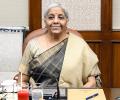
While the capital spending is being maintained at 3.1 per cent of the GDP, a little more would have boosted economic growth even further, suggests Rajiv Memani.


From the 30 Sensex firms, Mahindra & Mahindra, State Bank of India, Bharti Airtel, Hindustan Unilever, Kotak Mahindra Bank, UltraTech Cement, Adani Ports, and Tata Steel were the biggest gainers. ICICI Bank, IndusInd Bank, Asian Paints, Tech Mahindra, Infosys, HCL Technologies, Tata Consultancy Services, and Larsen & Toubro were among the laggards.

Sensex drops 138 points on foreign fund outflow

'Today, let us reaffirm our commitment to strive to realise Gandhiji's dreams. His watchwords, truth and nonviolence, will continue to remain relevant for the whole world. He also taught us that rights and duties are but the two sides of the coin - indeed, the true source of rights is duty. Today we recall his lessons in compassion too - compassion not only for our human neighbours but also for our other neighbours, namely, flora and fauna, rivers and mountains.'

'Stay disciplined, and remain invested.' 'Volatile times are the best to invest in structural opportunities at the right price.'
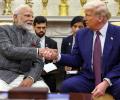
India should convert the Trump threat to an India opportunity, re-embracing a more liberal trade regime as a way of reviving manufacturing output and exports.

From the 30 Sensex firms, IndusInd Bank, Asian Paints, Hindustan Unilever, Tata Motors, Tata Steel, Titan, Reliance Industries and NTPC were among the major laggards. Tech Mahindra, Mahindra & Mahindra, Kotak Mahindra Bank, Infosys, HCL Technologies and State Bank of India were among the major gainers.

Udaan, India's largest business-to-business (B2B) e-commerce company, has received approval from the National Company Law Tribunal (NCLT) for its internal corporate restructuring plan, according to sources. By consolidating into a single entity, the restructuring will enhance Udaan's agility and pave the way for various financing options, including the ability to pursue an initial public offering (IPO) in India by 2026, according to people familiar with the matter.

Both new and completed project values as of December 2024 remain below pre-pandemic levels seen in 2019.
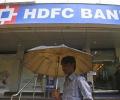
The country's largest private lender HDFC Bank is planning to facilitate a shift in its payments module from the existing core banking platform. This would ensure minimal payments downtime, even if core banking is not available. "This 15-month project will be followed by hollowing the customer-master modules from its existing core systems. "It will ensure a single system of record for customers across various products," said Sashidhar Jagdishan, managing director (MD) & chief executive officer (CEO), in the annual report for 2021-22.

These 10 stocks represent the best mix of value and growth, offering relatively low price-to-earnings and price-to-book ratios, a high return on equity, and sufficiently high potential from current levels.
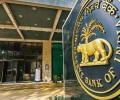
The Reserve Bank of India (RBI) will launch the Unified Lending Interface (ULI) nationwide in due course, aiming to transform India's lending sector, similar to how the Unified Payments Interface (UPI) revolutionised the payments ecosystem, Governor Shaktikanta Das said on Monday.
